Dallas Transportation: Getting Around DFW
Dallas transportation runs on the car, but DART light rail, the new Silver Line and the Trinity Railway Express now reach downtown, DFW Airport and the northern suburbs. Here's what you need to know about getting around the Dallas-Fort Worth metroplex.
DART — Dallas Area Rapid Transit
Dallas's public transit system includes light rail, buses, commuter rail, and regional rail. The DART light rail network has 93 miles of track, and the Silver Line regional rail adds another 26 miles for roughly 119 rail miles total. Trains connect major employment centers including downtown Dallas, UT Southwestern Medical Center, DFW Airport, and suburban hubs in Plano, Richardson, and Garland.
- Rail Lines: Red, Blue, Orange, Green (light rail) + Silver Line (regional, opened Oct 2025) + Trinity Railway Express (commuter)
- Monthly Pass: $126 for local, $192 for regional (includes TRE and the Silver Line)
- GoPass App: Buy tickets and plan routes via the GoPass mobile app
The Silver Line — Airport Rail for the Northern Suburbs
DART's newest line opened October 25, 2025 on the Cotton Belt corridor: 26 miles and 10 stations from Shiloh Road in Plano to DFW Airport Terminal B, linking seven cities (Plano, Richardson, Dallas, Addison, Carrollton, Coppell, and Grapevine) without going through downtown. Addison to the airport takes about 32 minutes; the full run is roughly an hour. Trains run once an hour off-peak and twice an hour during weekday peaks (6–9 AM and 4–7 PM), and the Regional Day Pass that covers it dropped from $12 to $9 on March 1, 2026.
For newcomers, the practical takeaway is that northern-suburb living no longer means driving to every flight. If rail access is shaping where you live, see our neighborhood picks by DART line in the Dallas neighborhoods guide.
Driving & Toll Roads
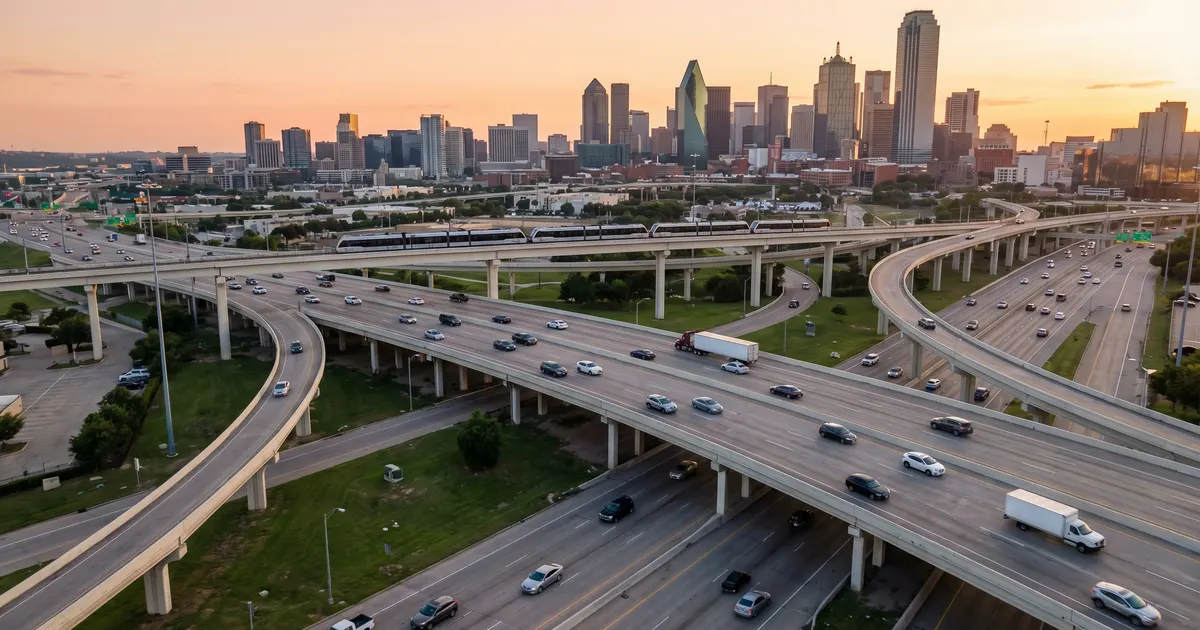
Most residents drive. The DFW highway system is extensive but gets congested during rush hours (7-9 AM and 4-7 PM). Key commute corridors include I-35E, US-75 (Central Expressway), I-635 (LBJ), and the Dallas North Tollway.
A TollTag is essential — see our Texas Toll Roads Guide for setup instructions and pricing.
Ride-Share & Car Services
Uber and Lyft are widely available throughout DFW. Average costs:
- Airport to Downtown: $25-40
- Uptown to Deep Ellum: $10-15
- Dallas to Plano: $30-45
Biking
Dallas is investing heavily in bike infrastructure. The Katy Trail (3.5 miles) runs through Uptown, Oak Lawn, and Victory Park. The Santa Fe Trail connects downtown to South Dallas. Lime and Bird scooters are available in urban neighborhoods.
DFW Airport
Dallas/Fort Worth International Airport (DFW) was the 4th-busiest airport in the world by passengers in 2025 (ACI World). It's located between Dallas and Fort Worth, about 20-30 minutes from downtown Dallas. Two DART lines reach it: the Orange Line light rail serves Terminal A, and the Silver Line regional rail serves Terminal B from the northern suburbs.
Dallas Love Field (DAL) is the Southwest Airlines hub, located just 7 miles from downtown Dallas in the Love Field neighborhood.