
Moving to Austin, Texas: Your Complete 2026 Relocation Guide
Moving to Austin in 2026 means a $560,000 City of Austin median sale price (Unlock MLS, August 2026), a $1,427 average one-bedroom rent (RentCafe, September 30, 2026), no state income tax, and a property-tax stack of about 2.05% inside Austin ISD; this guide covers which side of I-35 to live on, the school districts, and the commute.
Updated
Is Austin a good place to relocate to in 2026?
Yes. Austin is home to the tech corridor nicknamed "Silicon Hills," with zero state income tax, and a live-music and outdoor lifestyle few metros match. The City of Austin median sale price is $560,000 (Unlock MLS, August 2026), well below the 2022 peak.
- 0% state income tax, plus no corporate income tax attracts employers
- Silicon Hills: Tesla, Apple, Samsung, Dell and Oracle
- Median home: $560K City of Austin (Unlock MLS, Aug 2026), well below the 2022 peak, with more inventory now
- Lady Bird Lake, Barton Springs, and Zilker Park
Found this useful?Add RelocateMeTX as a preferred source on Google
Austin is the city that rewrote the rules. Once a sleepy state-capital town known for live music and college football, Austin exploded into one of America's most dynamic tech corridors, dubbed Silicon Hills, while somehow holding on to the creative, outdoor-obsessed culture that made it special in the first place. Tesla, Apple, Samsung, Dell, and Oracle all have massive operations here. The University of Texas at Austin anchors a research ecosystem that feeds talent directly into the local economy. Beyond the career upside, Austin delivers an outdoor lifestyle that few tech hubs can match: paddle Lady Bird Lake before work, swim at Barton Springs at lunch, and catch a show on Sixth Street after dinner, all without paying a dime in state income tax. Here is what makes 2026 especially interesting: the market has corrected from its 2022 peak. The Austin metro median sale price was $412,000 in August 2026, and inside the City of Austin it was $560,000 the same month (Unlock MLS, the Austin Board of REALTORS® MLS), so read each figure for its own geography. This guide covers everything you need to make a confident, informed move to Austin.
New to Austin? Live Furnished While You Get Settled.
Our affiliate, Furnished Apartments Dallas, quotes furnished stays in Austin. Send your dates and ask about stay length and price for a quote while you explore the area.
Call (469) 306-9811 for an Austin quote
Sponsored: RelocateMeTX is affiliated with F.A.D Furnished Apartments.
Explore Your Move
Everything you need, organized and actionable.
Austin at a Glance
Real numbers. Real advantages.
Metro Population
Metro Median Sale Price (Aug 2026)
State Income Tax
Sales Tax Rate
Job Growth (BLS, Aug 2026 vs Aug 2025)
Why Austin Keeps Attracting New Residents in 2026
Austin has transformed from a mid-size government town into one of the most sought-after metros in the United States, and the reasons go far beyond the "Keep Austin Weird" bumper stickers. The city offers a rare combination of explosive economic growth, world-class outdoor recreation, a globally recognized cultural scene, and the financial advantage of zero state income tax. Understanding what drives that appeal, and what trade-offs come with it, is the first step in deciding whether Austin is the right move for you.
Silicon Hills: A Tech Powerhouse
The corridor known as Silicon Hills stretches from downtown north through the Domain and Round Rock.Tesla's Gigafactory in southeastern Travis County serves as the production hub for the Model Y and Cybertruck. Apple runs a large campus in northwest Austin; its latest published Austin headcount is approximately 7,000 employees (Apple Newsroom, November 2019). Samsung's semiconductor fabrication plant sits in northeast Austin, and the company is building a separate $17 billion fab complex in nearby Taylor. Dell Technologies is headquartered in Round Rock. Oracle moved its global headquarters to Austin in 2021. Google, Meta, Amazon, and Indeed all maintain significant downtown offices. The density of tech talent, venture capital, and startup energy creates an employment market that attracts engineers, product managers, designers, and data scientists from across the country.
No State Income Tax
Texas levies no personal state income tax, and for professionals relocating from high-tax states, the savings are substantial and immediate. Professionals relocating from California keep five figures a year that would have gone to state income tax ($11,477 a year for a married couple with $200,000 of taxable income in 2025, per our break-even study), with comparable savings for New York and Oregon transplants at professional incomes. Over five years, those savings can fund a down payment on an Austin home. The trade-off is higher property taxes (about 2.05 percent combined before exemptions for a City of Austin address in Austin ISD in 2025, counting the city, Austin ISD, Travis County, Austin Community College and Central Health; 1.31 percent effective across Travis County once exemptions apply, Tax Foundation, 2024) and an 8.25 percent combined sales tax, but for most earners above median income, the net result is still a meaningful reduction in total tax burden.
Outdoor Lifestyle Without Compromise
What sets Austin apart from other tech hubs is that you do not have to sacrifice quality of life for career growth. Lady Bird Lake offers hike-and-bike trails winding through the heart of the city, and kayaking and stand-up paddleboarding are year-round activities. Barton Springs Pool, a natural limestone spring-fed pool averaging 68 to 70 degrees year-round, is Austin's most iconic swimming hole. The Barton Creek Greenbelt provides hiking, rock climbing, and swimming holes within city limits. The Hill Country west of Austin delivers hundreds of miles of scenic roads, state parks like Enchanted Rock and Pedernales Falls, and some of the best cycling terrain in Texas.
Live Music Capital of the World
Austin earned its "Live Music Capital of the World" designation honestly. The city hosts live music venues from the legendary Continental Club on South Congress to massive festival grounds at Zilker Park. South by Southwest (SXSW) takes over the city each March. Austin City Limits (ACL) fills Zilker Park across two weekends every October. Beyond the festivals, any given Tuesday night offers a half-dozen shows worth catching across genres ranging from country and blues to electronic and hip-hop. The music scene is not just entertainment; it is part of the city's identity and a major draw for relocators who want cultural depth alongside career opportunity.
The University of Texas at Austin
UT Austin is not just a college. It is an economic engine. With 55,172 students (fall 2026) and 4,693 faculty (fall 2025, per UT Austin's Facts & Figures page), the university is one of the metro's largest employers, though state government employs far more people across Austin. Its research expenditures totaled $1.37 billion in fiscal 2025 (UT Austin Facts & Figures), spawning startups and attracting federal research dollars. The McCombs School of Business, Cockrell School of Engineering, and Dell Medical School are all nationally ranked. For relocators with families, the university also supports a vibrant campus-area economy with restaurants, cultural institutions (the Blanton Museum, Harry Ransom Center), and Division I athletics that unite the city on fall Saturdays.
Top Reasons People Move to Austin
| Reason | Key Detail | Who Benefits Most |
|---|---|---|
| Tech job market | Silicon Hills corridor: Dell, Tesla and Oracle HQs (Fortune 500, 2026) | Engineers, PMs, designers |
| No state income tax | $11,477 a year vs. California for a joint return on $200,000 taxable income (2025) | High earners, remote workers |
| Outdoor recreation | Lady Bird Lake, Barton Springs, Greenbelt, Hill Country | Active lifestyle seekers |
| Live music and culture | Live venues, SXSW, ACL | Culture and entertainment fans |
| University ecosystem | UT Austin: 55,172 students (fall 2026), $1.37B research spending (FY25) | Academics, startup founders |
| Market correction | Metro median sale price $412K (August 2026, Unlock MLS), below the 2022 peak | First-time buyers, relocators |
| Quality of life | Lady Bird Lake, walkable core, food scene | Everyone |
Austin is not perfect: traffic is painful, summers are brutally hot, and cedar allergies are a genuine health concern. But the combination of career opportunity, financial advantage, and lifestyle quality is difficult to match anywhere else in the country. Ready to start planning? Our complete Austin moving guide covers checklists, costs, and everything you need. If you need temporary housing while you explore, check our furnished housing directory. Use the sections below to dive deeper into every aspect of making your move.
Austin Cost of Living: Budgeting for Rent, Taxes, and Utilities
Austin Key Monthly Expenses
| Expense | Monthly Cost |
|---|---|
| Property Tax (est. $412K metro median home, Unlock MLS Aug 2026, at Travis County's 1.31% effective rate after exemptions, Tax Foundation 2024) | $450/mo |
| CapMetro local monthly fare cap | $41.25 |
Austin's cost of living tells a story of correction and opportunity. During the pandemic boom of 2020 to 2022, Austin saw one of the sharpest home-price increases in the country, and the metro median sale price set its record in 2022. That frenzy has subsided. The metro median sale price was $412,000 in August 2026, down 6.4% from a year earlier, and the City of Austin median was $560,000 the same month (Unlock MLS, the Austin Board of REALTORS® MLS); the two measure different areas and are not interchangeable. For relocators who watched the market with frustration during the pandemic years, this correction is a genuine window of opportunity.
Housing Costs
The Austin housing market varies dramatically by area. Inner-city neighborhoods like Downtown, Zilker, and South Congress command premium prices. Suburban cities like Pflugerville, Round Rock, and Cedar Park offer more value, with median owner-occupied home values of $402,400 to $513,600 against $555,300 in the City of Austin (U.S. Census Bureau, American Community Survey 2020-2024). Premium Hill Country cities such as Lakeway, Bee Cave, and Dripping Springs run from $635,600 to $841,300 on the same Census measure. Rents have softened too: the median rent on leases signed inside the City of Austin was $2,200 in August 2026, 4.3% below a year earlier (Unlock MLS).
Property Taxes
Texas compensates for the absence of a state income tax with relatively high property taxes, and the number you should plan around depends on which measure you use. Across Travis County, owners pay about 1.31 percent of home value a year once exemptions are applied (Tax Foundation, county effective rate, 2024), about $5,400 on a $412,000 home (the metro median sale price in August 2026). A new buyer inside Austin city limits pays more than that in the first year, because the bill before exemptions is the sum of every taxing unit's rate at the address: for a City of Austin address in Austin ISD the 2025 rates add up to about 2.05 percent (City of Austin 0.524017, Austin ISD 0.9252 and Travis County 0.375845 per the Travis Central Appraisal District's 2025 Annual Report, Austin Community College 0.1034 and Central Health 0.118023 per $100), before any MUD, so price the specific address before you budget. File your homestead exemption with the Travis Central Appraisal District by the April 30 deadline (Form 50-114), which removes $140,000 from your taxable value for school-district taxes. Williamson County (Round Rock, Cedar Park, Leander) and Hays County (Dripping Springs, Kyle, Buda) run in a similar band, but rates vary by district, so check the specific address before you budget.
Utilities: Austin Energy Is Municipal
Unlike Dallas and Houston, where you choose your electricity provider from a competitive retail market, Austin Energy is a municipally owned utility, so you do not get to choose your provider. Austin Energy is your sole electricity provider if you live within Austin city limits. Bills rise sharply during peak summer cooling. Water is provided by Austin Water, another municipal utility. Outside Austin city limits, utility providers vary by area: Pedernales Electric Cooperative serves much of the Hill Country, and Oncor serves some eastern areas where deregulated electricity does apply.
Income Tax Savings vs. Coastal States
The no-income-tax advantage is Austin's most powerful financial draw. Here is what it looks like at one illustrative salary level, for example $100,000 of taxable income for a single filer in 2025:
| Category | Austin, TX | San Francisco, CA | New York City | National Average |
|---|---|---|---|---|
| Median Home Price city median sale price, Redfin, three months to Aug 2026 |
$549,636 (City of Austin; metro $412,000, Unlock MLS) | $1,591,447 | $899,405 | $398,596 (U.S.) |
| State + City Income Tax (on $100K taxable, single, 2025) | $0 | $5,739 | $9,183 | — |
| Property Tax Rate | 1.31% (Travis County effective, Tax Foundation 2024) | 0.72% | — | — |
Groceries, Dining, and Everyday Costs
Austin benefits from proximity to H-E-B's headquarters in San Antonio, and the beloved Texas grocery chain keeps food prices competitive. H-E-B's store-brand products are exceptionally well-regarded, and the chain's presence exerts downward pricing pressure across the market. Dining out reflects Austin's foodie culture: the city's food-truck scene offers cheap meals.
For a personalized calculation, use our Austin cost-of-living calculator to compare your current city's expenses against Austin neighborhood by neighborhood.
State income tax on your salary, bonuses, and retirement income in Texas
Featured Neighborhoods
Hand-picked areas popular with relocators

Downtown Austin

South Congress

East Austin

Zilker
Mueller

Cedar Park
Median rent $1,846/mo
Latest Austin Articles
Austin Realities New Residents Don't Expect
Austin has genuine appeal: live music, outdoors, tech jobs, and culture. But transplants consistently flag the same five surprises. Here is what to know before you sign a lease or make an offer.
I-35 Construction: 2024–2033, Real Commute Impacts
TxDOT's $5.6 billion I-35 Capital Express Central project has been under construction through Austin's urban core since October 2024 and is scheduled to finish in 2033. Lanes are reduced, ramps are shifted, and daily incidents cause long backups during peak hours. If your workplace is along the I-35 corridor (UT Austin, Dell Seton Medical Center, The Domain, Round Rock), use Waze or Google Maps in real time to find alternate routes on MoPac (Loop 1) or US-183.
Water Restrictions: Watering Days and Lawn Irrigation Limits
Austin draws water from Barton Springs, Barton Creek, and the Colorado River, all susceptible to drought. Since Sept. 2, 2025, Austin has been under Conservation Stage restrictions: residential automatic and manual irrigation systems may run one day per week, and hose-end sprinklers and drip irrigation two days per week, in both cases from midnight to 10 a.m. or 7 p.m. to midnight (Austin Water). Drought stages tighten these limits. If you're buying a home with St. Augustine grass and an irrigation system, budget for higher summer water bills and expect restriction periods.
Summer Heat: About 29 Days Above 100°F and Utility Bills to Match
Austin averages 29 days above 100°F in a normal year, per the NWS 1991–2020 climate normals at Camp Mabry, and they cluster in July and August. Air conditioning is not a comfort feature here, it is survival infrastructure, and your summer Austin Energy bill will reflect that. Budget for the peak cooling months and treat insulation upgrades as a first-year investment if you buy.
Wildfire Interface: Western Suburbs Carry Real Risk
Bee Cave, Lakeway, Dripping Springs, and other Hill Country western suburbs sit in the Wildland-Urban Interface (WUI). The 2011 Bastrop County Complex fire destroyed homes across Bastrop County. Homeowner's insurance in WUI zones is more expensive and harder to obtain, and some carriers have pulled back from the Texas Hill Country. Before you buy out west, get quotes from at least three carriers and confirm coverage is actually available at that address. If no standard carrier will write the policy, the Texas FAIR Plan Association is the state's insurer of last resort for inland property (TWIA is coastal-only and does not apply here).
Property Tax: Budget on the Address, Not the County Average
Travis County's effective property tax rate is 1.31% of home value after exemptions (Tax Foundation, county effective rate, 2024), about $6,550 a year on a $500,000 home. A new buyer pays more than that in the first year, because the bill before exemptions is the sum of every taxing unit's rate at the address. Once you file your homestead exemption, the taxable value of your home can rise no more than 10% a year, which protects you from runaway assessments. File immediately after closing.
Take Your Time Finding the Right Home in Austin.
Our affiliate, Furnished Apartments Dallas, quotes furnished Austin stays while you explore neighborhoods and finalize your move.
Call (469) 306-9811 for an Austin quote
Sponsored: RelocateMeTX is affiliated with F.A.D Furnished Apartments.
Best Austin Neighborhoods and Suburbs by Lifestyle
Austin's neighborhood landscape is one of the most varied in Texas. From the urban density of downtown high-rises to the Hill Country acreage of Dripping Springs, the metro offers dramatically different lifestyles within a 30-minute drive. Your ideal neighborhood depends on whether you prioritize walkability, school quality, outdoor access, commute time, or budget. Browse our full neighborhood directory for detailed profiles, or jump to our Austin moving guide when you are ready to plan your transition. Here is an overview of 15 neighborhoods and suburbs.
Inner Austin Neighborhoods
Downtown Austin is the urban core: a dense collection of high-rise condos, Class A office towers, and the Sixth Street entertainment district. Best for young professionals and remote workers who want to live car-free or car-light.
South Congress (SoCo) is Austin's most iconic neighborhood, a walkable stretch of boutiques, restaurants, music venues, and galleries with a distinctly Austin vibe. Best for those who want Austin's creative culture on their doorstep.
East Austin has experienced the most dramatic transformation in the metro over the past decade, evolving from a historically underserved area into one of the most desirable neighborhoods in the city. Best for creatives and foodies who want music venues, food trucks and a short trip to downtown.
Zilker sits adjacent to Zilker Park, Barton Springs Pool, and the Barton Creek Greenbelt, making it the outdoor lover's neighborhood of choice. Walk Score: 75. Best for outdoor enthusiasts and families who want green space and a central location.
Hyde Park is a historic neighborhood known for tree-lined streets, Craftsman bungalows, and proximity to UT Austin. Walk Score: 78. Best for academics, graduate students, and those who value character and walkability.
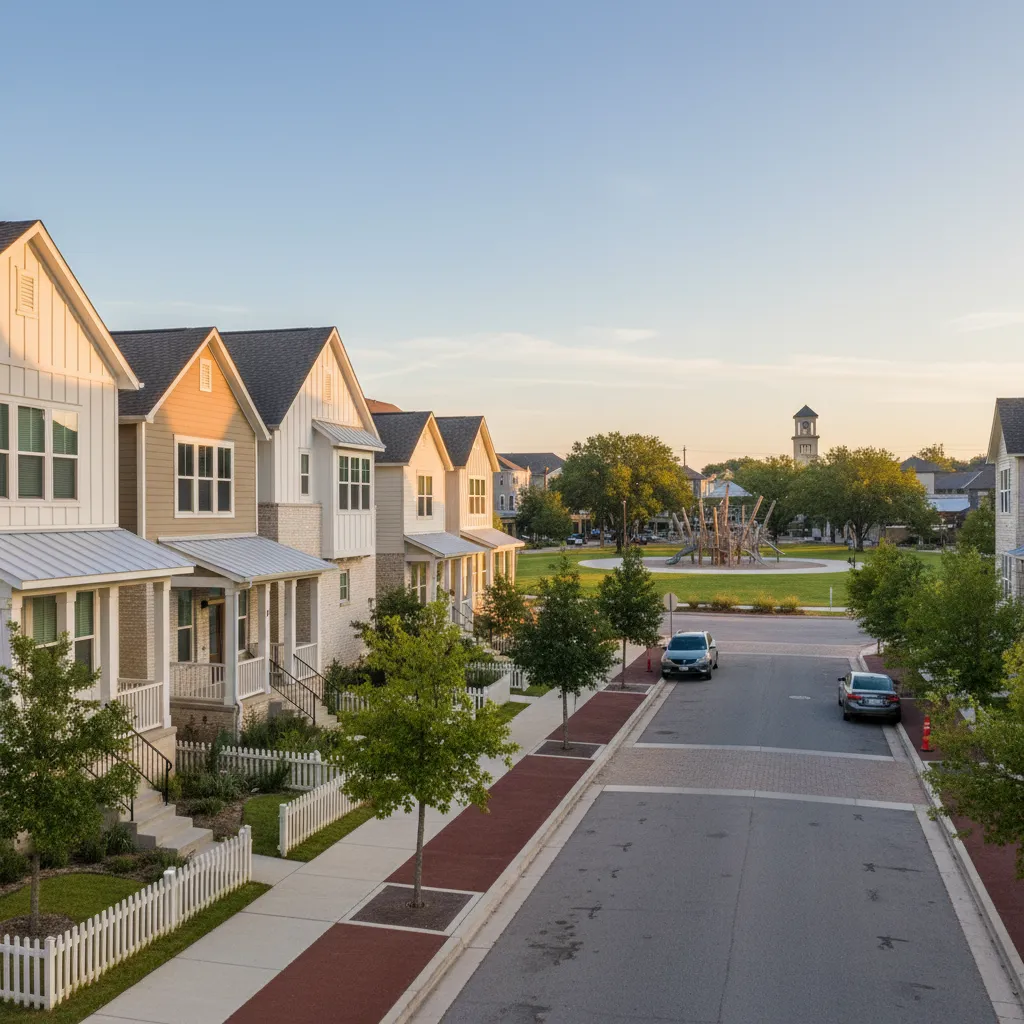
Mueller is a master-planned urban infill community built on the former Robert Mueller Municipal Airport site. Known for its new-urbanist design with homes, retail, parks, and trails integrated into a walkable grid. Best for families who want new construction with an urban feel.
Clarksville is a small, historic neighborhood near downtown with tree-covered streets and some of the most charming homes in Austin. Best for those who can afford premium prices and want a quiet, walkable, central location.
Suburban Communities
Cedar Park lies northwest of Austin and has emerged as one of the most popular family suburbs. Strong Leander ISD schools, new construction, and H-E-B Plus anchors. Median home value $513,600 and median gross rent $1,846 (U.S. Census Bureau, ACS 2020-2024). Best for families seeking value and quality schools.
Round Rock is Dell Technologies' hometown and one of the largest suburbs, consistently ranked among the best places to live in Texas. Round Rock ISD enrolled 45,971 students in fall 2025 (TEA, 2025-26) and holds a TEA B (2025-26). Median home value $418,600 and median gross rent $1,763 (U.S. Census Bureau, ACS 2020-2024). Best for families, Dell employees, and those wanting suburban infrastructure.
Pflugerville offers some of the most affordable housing in the Austin metro while still providing easy access to downtown via SH-130 and I-35. Median home value $402,400 and median gross rent $1,932 (U.S. Census Bureau, ACS 2020-2024). Best for budget-conscious buyers and first-time homeowners.
Georgetown is the Williamson County seat, known for its historic town square, retirement communities, and family neighborhoods. Median home value $429,100 and median gross rent $1,795 (U.S. Census Bureau, ACS 2020-2024). Best for retirees and families who want small-town character with Austin proximity.
Leander is one of the fastest-growing cities in Texas, driven by affordable housing and Leander ISD schools. The MetroRail Red Line terminates here, providing rail access to downtown. Median home value $506,200 and median gross rent $1,939 (U.S. Census Bureau, ACS 2020-2024). Best for commuters, young families, and value seekers.
Premium Hill Country Suburbs
Dripping Springs is the "Gateway to the Hill Country," offering rural charm, Dripping Springs ISD schools (TEA B, 2025-26), and stunning landscapes. Median home value $635,600 (U.S. Census Bureau, ACS 2020-2024). Best for families prioritizing schools and outdoor space.
Lakeway sits on the shores of Lake Travis, offering water recreation and Hill Country views alongside Lake Travis ISD schools. Median home value $841,300 (U.S. Census Bureau, ACS 2020-2024). Best for water enthusiasts and families seeking premium schools.
Bee Cave is served by Lake Travis ISD, which holds a TEA A (2025-26). Hill Country Galleria provides upscale shopping and dining. Median owner-occupied home value: $776,400 (U.S. Census Bureau, ACS 2020-2024). Best for families who consider school quality the top priority.
Neighborhood Comparison Table
| Neighborhood | Median Home Value (Census) | Median Gross Rent (Census) | Walk Score | Best For |
|---|---|---|---|---|
| Downtown | — | — | — | Young professionals |
| South Congress | — | — | — | Creative culture |
| East Austin | — | — | — | Foodies, creatives |
| Zilker | — | — | 75 | Outdoor lovers |
| Hyde Park | — | — | 78 | Academics |
| Mueller | — | — | — | Urban families |
| Cedar Park | $513,600 | $1,846 | 26 | Families |
| Round Rock | $418,600 | $1,763 | 26 | Dell employees, families |
| Pflugerville | $402,400 | $1,932 | 23 | Budget-conscious |
| Dripping Springs | $635,600 | $2,234 | — | Hill Country families |
| Lakeway | $841,300 | $2,981 | — | Lake lifestyle |
| Bee Cave | $776,400 | $1,877 | — | Top schools (Lake Travis ISD) |
Home values and rents for the incorporated cities are U.S. Census Bureau American Community Survey 2020-2024 medians, survey values rather than this month's prices. No comparable primary figure exists for neighborhoods inside the City of Austin, so those cells are blank.
For detailed guides on each neighborhood, including boundary maps, school assignments, walkability analysis, and commute times, visit our Austin neighborhoods directory.
Median home price in Travis County: $489,000 in August 2026, down 6.4% from a year earlier
Source: Unlock MLS (Austin Board of REALTORS® MLS), Travis County, August 2026
Plan Your Move with Real Numbers
Not guesswork. Interactive calculators for cost of living, rent vs buy analysis, salary comparison, and moving costs.
Austin Tech Job Market: Who's Hiring in 2026
Each count is the employer's own published figure: Amazon, Austin (2026); Ascension, all of Central Texas including Waco (2026); St. David's HealthCare (2026); Apple, Austin (2019); Samsung, Austin fabs (2026).
Austin's job market is defined by the Silicon Hills tech corridor, but the economy extends well beyond software and semiconductors. The metro supports a diversified employer base spanning higher education, healthcare, government, defense, and advanced manufacturing. Understanding who hires here, where they are located, and what they pay is essential for relocators evaluating career opportunities.
The Silicon Hills Corridor
The term Silicon Hills refers to the concentration of technology companies along the I-35 and MoPac corridors from downtown Austin northward through the Domain, the Arboretum area, and into Round Rock. This corridor is home to tech companies ranging from pre-seed startups to trillion-dollar corporations. The ecosystem benefits from UT Austin's engineering and computer science programs, a favorable tax environment, and a quality of life that helps companies recruit against coastal competitors.
Anchor Employers
Tesla operates its Gigafactory Texas in southeastern Travis County, with vehicle manufacturing, battery production, and corporate functions on the site. The facility is the primary production site for the Model Y and Cybertruck and represents one of the largest manufacturing investments in Texas history.
University of Texas at Austin is one of the largest employers in the metro, with 4,693 faculty in fall 2025 (UT Austin Facts & Figures) alongside research staff, medical professionals, and administrative roles.
Dell Technologies, headquartered in Round Rock, runs engineering, sales, and corporate functions from its campus there. Dell's presence has catalyzed an entire technology ecosystem in the Round Rock and North Austin corridor.
Samsung Austin Semiconductor operates a major fabrication plant in northeast Austin that manufactures advanced semiconductor chips, with 4,500 employees by Samsung's own count (Samsung Austin Semiconductor campus page, 2026). Samsung is also building a much larger fab complex in nearby Taylor, in Williamson County: a $17 billion initial minimum investment, by Samsung's count, that will add jobs across the northeast side of the metro.
Apple has built a 3-million-square-foot campus in northwest Austin for engineering and operations; its latest published Austin headcount is approximately 7,000 employees (Apple Newsroom, November 2019). Apple put the campus at $1 billion when it broke ground (Apple Newsroom, November 2019).
Other Major Tech Employers
Google opened its new downtown Sail Tower office in August 2026 (Google, Aug 3, 2026). Meta keeps Austin offices downtown, including 300 West Sixth and Third + Shoal, though it never occupied the Sixth and Guadalupe space it pre-leased in 2021. Amazon counts 17,000 employees in Austin (Amazon, August 2026). Oracle moved its global headquarters from California to Austin in 2021, then announced in 2024 that it intends to relocate the headquarters again, to Nashville, over a period of years. Indeed, which calls itself the world's #1 job site by visits (Comscore, March 2026), also has a large Austin presence. Cisco, AMD, NXP Semiconductors, and National Instruments (now part of Emerson) also maintain significant Austin operations.
Beyond Tech
Healthcare: Ascension Seton runs hospitals and clinics across the region; Ascension's Texas operation, which also includes Ascension Providence in Waco, employs 16,000 associates across Central Texas (Ascension, August 2026). St. David's HealthCare operates several hospitals with more than 10,600 colleagues (St. David's HealthCare, 2026). Dell Medical School at UT Austin is expanding academic medicine in the region.
Government: As the state capital, Austin is home to a large State of Texas workforce, and the City of Austin is another major public employer.
Defense: The U.S. Army Transformation and Training Command (T2COM), which absorbed the former Army Futures Command, is headquartered in Austin, an unusual choice that underscores the city's role in defense innovation.
Major Employer Summary
| Employer | Industry | Local Employees employer’s own published figure, year |
HQ? | Location |
|---|---|---|---|---|
| Amazon | Tech / Retail | 17,000 (Amazon, 2026) | — | Multiple locations |
| Ascension Seton | Healthcare | 16,000 across Ascension Texas, incl. Waco (Ascension, 2026) | — | Multiple locations |
| St. David's | Healthcare | 10,600+ (St. David's, 2026) | — | Multiple locations |
| Apple | Technology | ~7,000 (Apple, 2019) | — | NW Austin |
| Samsung | Semiconductor | 4,500 (Samsung, 2026) | — | NE Austin |
| UT Austin | Higher Education | 4,693 faculty; staff total not published (UT Austin, fall 2025) | — | Central Austin |
| Tesla | Automotive / Energy | Not published | HQ | SE Travis County |
| Dell Technologies | Technology | Not published | HQ | Round Rock |
| State of Texas | Government | — | — | Capitol Complex |
For in-depth profiles of each employer, including salary ranges, campus locations, benefits, and hiring trends, visit our Austin employer directory.
Silicon Hills: Tesla Gigafactory, Apple, Samsung, Dell HQ, and growing
Tech, semiconductor, defense (Army T2COM), and healthcare drive Austin's economy
Austin Schools, Traffic, and Daily Life Reality
Ratings are the official Texas Education Agency A–F accountability grade, not a Niche composite. Check any district at txschools.gov.
School quality varies enormously across the Austin metro, and for families with children, the district you choose may matter more than any other single factor in your relocation decision. The Austin area is served by many independent school districts, from top-rated to struggling. Understanding the landscape is critical because your home address normally determines your school district.
Eanes ISD: The Gold Standard
Eanes ISD holds a TEA A (2025-26). The district serves West Lake Hills, Rollingwood, and parts of west Austin, in the hills just west of downtown. (Bee Cave and Lakeway are Lake Travis ISD.) Westlake High School is the district's flagship campus, known for elite academics, a nationally ranked football program, and a deeply invested parent community. Enrollment was 7,530 students in fall 2025 (TEA, 2025-26) across nine campuses. The trade-off is home prices. Families who prioritize school quality above all else consistently choose Eanes.
Round Rock ISD: The Workhorse
Round Rock ISD is the largest suburban school district in the Austin metro, serving roughly 46,000 students. Its most recent Texas Education Agency accountability rating is a B, which still places it among the stronger large districts in the state. The district covers Round Rock, portions of Pflugerville, and parts of north Austin. Key high schools include Westwood, McNeil, and Cedar Ridge. For families who want strong schools without Eanes-level home prices, Round Rock ISD is the most common choice.
Leander ISD: Fast-Growing Excellence
Leander ISD serves approximately 42,000 students across Leander, Cedar Park, and parts of northwest Austin. Its most recent TEA accountability rating is a B, which is respectable for one of the fastest-growing districts in Texas. Vista Ridge, Leander, and Cedar Park High Schools are the primary campuses. New schools continue to open as residential development expands northward.
Dripping Springs ISD: Small and Elite
Dripping Springs ISD serves the Dripping Springs community with 8,808 students (TEA, fall 2025-26). Its most recent TEA accountability rating is a B. The district is known for small class sizes, strong community involvement, and Hill Country campus settings. For families relocating from out of state who want a small-district feel with top-tier academics, Dripping Springs is an increasingly popular choice.
Lake Travis ISD
Lake Travis ISD serves the Lakeway area with 10,771 students (TEA, fall 2025-26). It holds a TEA A (2025-26) and benefits from strong property tax revenue and an engaged parent community. Lake Travis High School is the primary campus and is known for strong academics and athletics.
Austin ISD: A District in Transition
Austin ISD is the largest district by geography, serving central Austin with 69,074 students (TEA, fall 2025-26). Its most recent (2025-26) TEA accountability rating is a B, and campus-level quality varies enormously. Critical warning for relocators: Austin ISD is closing or consolidating 10 schools starting in 2026-27, a plan it says eliminates 6,319 empty seats amid budget pressure. The district has lost more than 10,000 students over the past decade as families moved to surrounding suburban districts. If you are considering a home within Austin ISD boundaries, research the specific campus and confirm it is not on a closure or consolidation list. The district does operate several excellent magnet and choice programs, including the Liberal Arts and Science Academy (LASA), Kealing Middle School's magnet program, and Ann Richards School for Young Women Leaders.
School District Comparison
Key Takeaways for Families
- School district should drive your neighborhood choice. In Texas, your address determines your school district, and inter-district transfers are rare. Choose your district first, then narrow down neighborhoods.
- Eanes ISD holds a TEA A (2025-26) if you can afford the Hill Country home prices.
- Round Rock and Leander ISDs offer the best value. Both hold a TEA B (2025-26), with lower home values than Eanes territory (Census median owner-occupied value: Round Rock $418,600, Leander $506,200, Cedar Park $513,600, ACS 2020-2024).
- Austin ISD requires careful research. The district is closing schools and facing budget pressures, but campus-level quality varies widely. Magnet programs like LASA are world-class.
- Dripping Springs and Lake Travis ISDs are excellent choices for families who want smaller, community-oriented districts with Hill Country settings.
For campus-level data, boundary maps, and enrollment guides, visit our full Austin school district guide.
| District | TEA Rating | Enrollment | Location |
|---|---|---|---|
| Eanes ISD | A | 7,530 | West Lake Hills / Rollingwood |
| Round Rock ISD | B | 45,971 | Round Rock / Pflugerville |
| Leander ISD | B | 41,953 | Leander / Cedar Park |
| Dripping Springs ISD | B | 8,808 | Dripping Springs |
| Lake Travis ISD | A | 10,771 | Lakeway |
| Austin ISD | B | 69,074 | Central Austin |
TEA rating is the official Texas Education Agency A–F accountability grade (2025-26). Check any district at txschools.gov.
Austin ISD is closing or consolidating 10 schools from 2026-27, while Eanes ISD holds a TEA A
School district quality is the first question most relocating families ask about Texas
Getting Around Austin
Austin's transportation infrastructure is the metro's most significant growing pain. The city's population nearly doubled in the past two decades, but its road network and transit system did not keep pace. The result is traffic congestion that consistently ranks among the worst in Texas and some of the worst in the nation for a city its size. That said, a massive highway expansion and a transformative transit investment are both underway, and strategic location choices can dramatically reduce your commute pain.
I-35: The Backbone and the Bottleneck
Interstate 35 is Austin's primary north-south artery. It is also, without exaggeration, one of the most congested stretches of highway in the United States. TxDOT's $5.6 billion I-35 Capital Express Central project started main construction in October 2024 and is scheduled to run through 2033. It will lower the mainlanes through central Austin, add managed lanes, and create a boulevard-style cap over portions of the route. Expect detours, lane closures, and stretched commute times for years. The long-term payoff should be substantial, since the redesigned corridor adds capacity and reconnects east and west Austin neighborhoods that the elevated highway has divided for decades. In the meantime, anyone commuting along I-35 needs a plan B.
Key Highway Corridors
- I-35: North-south spine connecting San Antonio to Dallas through central Austin. The primary route for Round Rock, Pflugerville, Georgetown, and San Marcos commuters.
- MoPac (Loop 1): North-south route on the west side of Austin, paralleling I-35. Toll express lanes use dynamic pricing that rises with congestion.
- SH-130: Eastern bypass toll road connecting Georgetown to south Austin. Faster alternative to I-35 for Pflugerville and eastern suburb commuters, with an 85 mph speed limit on the southern segment.
- US-183: North-south route connecting Cedar Park and Leander to the Austin-Bergstrom airport area.
- SH-71: East-west route connecting Bee Cave and the Hill Country to Austin-Bergstrom International Airport.
- Loop 360 (Capital of Texas Highway): Scenic north-south route through the Hill Country on Austin's west side. Beautiful drive, but traffic bottlenecks at every intersection.
Capital Metro: Bus and Rail
Capital Metro, known locally as CapMetro, is Austin's public transit agency. It operates the bus network and the MetroRail Red Line, a 32-mile, 10-station commuter route from Leander through Cedar Park and north Austin into downtown. Rail service is built around weekday commuters and thins out badly at night and on weekends. The frequent-service backbone is MetroRapid, which now runs four lines: 801 (North Lamar/South Congress), 803 (Burnet/South Lamar), 800 (Pleasant Valley), and 837 (Expo Center), the last two of which opened in June 2026. A local bus or MetroRapid ride costs $1.25 and MetroRail costs $3.50, with fares capping automatically at $2.50 a day and $41.25 a month on local service.
Project Connect: The Future of Austin Transit
In 2020, Austin voters approved Project Connect, a $7.1 billion transit investment. Due to cost overruns, Phase 1 was scaled back significantly: the downtown tunnel was dropped, and the approved build covers 9.8 miles of surface-running light rail with 15 stations from 38th Street through downtown, splitting toward Yellow Jacket Lane on East Riverside and Oltorf on South Congress. Construction is expected to begin in 2027. Future phases would extend service north toward Tech Ridge and out to Austin-Bergstrom, though no firm timeline exists for those. If you are renting for the next few years, this changes nothing; if you are buying with a decade-long horizon, the station map is worth studying.
Austin-Bergstrom International Airport (ABIA)
Austin-Bergstrom International Airport (AUS) served 21.7 million passengers in 2025, its third-busiest year on record. A multi-phase terminal, checkpoint, and parking expansion is underway, so confirm which entrance and garage are open before you drive out. The airport sits in southeast Austin; drive times from downtown and the northern suburbs swing widely with traffic, so check a live map before you leave.
The Car Reality
Despite transit improvements on the horizon, a car is essential in Austin unless you live and work in the downtown core. Austin is not a walkable or bikeable city at the metro scale, and I-35 corridor commutes can stretch past an hour at peak. If you are moving from a city with robust public transit (New York, Chicago, San Francisco), expect a significant adjustment. Strategic neighborhood selection (living close to your workplace corridor) is the single most effective way to manage commute stress.
Transit and Commute Options
| Mode | Coverage | Cost | Best For |
|---|---|---|---|
| Personal Vehicle | Entire metro | Gas + insurance + tolls | Most residents |
| MetroRail Red Line | Leander → Downtown | $3.50 one-way ($96.25/mo cap) | NW suburb commuters |
| CapMetro bus + MetroRapid | Central Austin, 4 rapid lines | $1.25 per ride ($41.25/mo cap) | Inner-city commuters |
| MoPac Express Lane | MoPac corridor | Dynamic toll, rises with congestion | West Austin commuters |
| SH-130 Toll Road | Georgetown → S. Austin | TxTag; 85 mph south segment | Eastern bypass |
| Rideshare (Uber/Lyft) | Urban core | Varies by distance and demand | Nightlife, airport |
For detailed commute planning, including maps showing drive times from every neighborhood to major employment centers, visit our Austin transportation guide.
I-35 is being rebuilt through central Austin until 2033 (TxDOT)
I-35 is being rebuilt through 2033. Capital Metro rail + bus exists, but car ownership is essential. Project Connect light rail coming.
Austin Weather & Climate
See live Austin weather forecast & climate data →
Austin's climate is a major draw for relocators from northern and coastal cities, and a major adjustment for those not prepared for the intensity of a Central Texas summer. With mild winters and spectacular spring wildflower seasons, Austin delivers excellent outdoor weather for roughly nine months of the year. The other three months (June through August) are genuinely brutal. Here is an honest, month-by-month breakdown.
Spring: March Through May
Spring is arguably Austin's most beautiful season. March and April bring the famous Texas wildflower bloom: bluebonnets, Indian paintbrush, and winecups carpet the Hill Country roadsides and state parks. Temperatures climb from the low 70s in March to the mid-80s in May. Normal rainfall is about 2.9 inches in March, 2.4 in April and 5.0 in May. Outdoor activities are at their peak: Lady Bird Lake, the Greenbelt, and Zilker Park are packed on weekends. This is also SXSW season (mid-March), when the city comes alive with conferences, music, and film events. The weather during this period is, quite honestly, perfect.
Summer: June Through September
Summer in Austin is not for the faint of heart. In a normal year the city records about 29 days above 100 degrees Fahrenheit (NWS 1991–2020 normals, Camp Mabry), concentrated between June and September, and they often arrive in stretches of 10 to 14 consecutive days. July and August are the worst, with normal highs of about 97 to 98 degrees and normal lows near 75. Humidity is lower than Houston's (NOAA normals). Air conditioning is not a luxury but a survival necessity, and electricity bills spike accordingly. Outdoor activities shift to early morning and evening hours. Lady Bird Lake sees its heaviest kayak and paddleboard traffic before 9 AM. Barton Springs Pool, which averages 68 to 70 degrees year-round, becomes the city's collective refuge. Transplants from northern climates typically find their first Austin summer shocking but adapt by the second year.
Fall: October Through November
Fall is Austin's best-kept secret and arguably the best two months of the year. October brings ACL Festival (Austin City Limits), when Zilker Park hosts two weekends of outdoor music in near-perfect weather. Temperatures drop to the 80s during the day and the 60s at night. Humidity fades, skies clear, and the Hill Country takes on golden tones. November continues the pattern with highs in the 70s and cool, dry air. This is the season that makes transplants from harsher climates fall in love with Austin. Outdoor dining, hiking, and cycling are all at their peak during these weeks.
Winter: December Through February
Austin winters are mild by national standards. The average January high is about 63 degrees and the average low about 42 (NOAA 1991–2020 normals, Camp Mabry). Snow is exceedingly rare; most years see zero accumulation. Hard freezes occur some winters but typically last only a day or two. The notable exception was Winter Storm Uri in February 2021, which brought record-breaking cold, widespread power outages, and burst pipes across Texas. The grid has been strengthened since then, but the event remains a cautionary reminder that extreme cold, while rare, can be devastating when it arrives.
Cedar Fever: December Through February
Cedar Fever is not a cold or flu. It is an intense allergic reaction to pollen from Ashe juniper trees (locally called "mountain cedar") that blanket the Hill Country. Cedar pollen season typically runs from December through February, peaking in January. The symptoms are dramatic: severe nasal congestion, itchy and watery eyes, headache, fatigue, and sometimes a low-grade fever (hence the name). Many Austin residents experience cedar allergy symptoms, and for newcomers with no prior exposure, the first season can be particularly intense. Over-the-counter antihistamines, nasal sprays, and allergy immunotherapy are common treatments. If you have a history of seasonal allergies, consult an allergist before or shortly after your move. Read our complete Cedar Fever guide for treatment strategies and pollen-tracking resources.
Flash Flood Alley
Central Texas sits in what meteorologists call Flash Flood Alley. The combination of thin soil over limestone bedrock, steep terrain, and intense thunderstorms creates conditions where dry creeks can become raging torrents within minutes. Austin and the surrounding Hill Country have experienced multiple catastrophic flood events, and flash-flood warnings should always be taken seriously. Key precautions for residents: never drive through standing water ("Turn Around, Don't Drown"), sign up for Warn Central Texas alerts, know the flood history of your neighborhood, and avoid building or renting in low-lying creek areas. Our Flash Flood Alley guide covers flood zones, insurance requirements, and real-time monitoring resources.
Monthly Weather Summary
| Month | Avg High | Avg Low | Rain (in) | Notable |
|---|---|---|---|---|
| January | 63°F | 42°F | 2.64 | Cedar Fever peak |
| February | 67°F | 46°F | 1.89 | Driest month; Cedar Fever continues |
| March | 73°F | 52°F | 2.88 | SXSW, wildflowers begin |
| April | 80°F | 59°F | 2.42 | Peak bluebonnet season |
| May | 87°F | 67°F | 5.04 | Flash flood risk increases |
| June | 93°F | 73°F | 3.68 | Summer begins in earnest |
| July | 97°F | 75°F | 1.96 | Second-driest month |
| August | 98°F | 75°F | 2.74 | Hottest month |
| September | 91°F | 70°F | 3.45 | Heat begins to fade |
| October | 83°F | 61°F | 3.91 | ACL Festival, best month |
| November | 72°F | 51°F | 2.92 | Perfect outdoor weather |
| December | 64°F | 43°F | 2.72 | Cedar Fever begins |
For real-time weather tracking, allergen levels, and flood alerts, see our Austin weather and climate guide.
Austin Moving Checklist
Moving to Austin involves more than packing boxes and booking a truck. Texas has specific requirements for new residents, from driver's license timelines to vehicle registration inspections, and Austin adds a few unique wrinkles, most notably its municipal utility system. This checklist covers every critical step, organized by priority and timeline, to ensure nothing falls through the cracks during your relocation.
Before You Arrive
- Research neighborhoods and school districts. If you have school-age children, your district choice should drive your home search. See our Austin neighborhoods guide and school district guide for detailed comparisons.
- Secure housing. Austin's rental market has loosened since 2022, but desirable inner-city units still move fast. For purchases, the correction has created buyer-friendly conditions with more inventory and negotiating power. Our Austin housing guide covers market data by neighborhood.
- Set up Austin Energy. This is the single most unique aspect of an Austin move. Austin Energy is a municipal utility, and it is your only option for electricity within Austin city limits. Call 512-494-9400 or visit austinenergy.com to establish service at your new address. You must set up service before move-in. Unlike Dallas and Houston, you cannot shop for electricity providers. If your new home is outside Austin city limits, check whether you are served by Pedernales Electric Cooperative, Oncor, or another provider.
- Set up Austin Water. Call 512-972-0000 or visit austintexas.gov/water to establish water service. Austin Water is also a municipal utility, so no provider choice is required.
- Choose internet service. AT&T Fiber, Google Fiber, and Spectrum are the primary options. Google Fiber availability varies by neighborhood, so check coverage before signing a lease or closing on a home. AT&T Fiber covers most of the metro.
- Forward your mail. File a change of address with USPS at usps.com at least two weeks before your move.
First Week
- Confirm all utilities are active. Verify Austin Energy, Austin Water, gas (Texas Gas Service), and internet are functioning at your new address. For a complete utility setup walkthrough, see our first-week checklist.
- Register for Warn Central Texas alerts. Sign up at warncentraltexas.org for emergency notifications including flash-flood warnings, severe weather alerts, and wildfire notices. Given Austin's location in Flash Flood Alley, this is a genuine safety priority.
- Locate your nearest H-E-B. H-E-B is the dominant grocery chain in Austin (and all of Texas), and most neighborhoods have one within a 10-minute drive. The stores are excellent, prices are competitive, and the store-brand products are genuinely outstanding.
- Explore your neighborhood. Walk or drive around your immediate area. Find the nearest parks, restaurants, coffee shops, and pharmacy. Austin's neighborhood character varies dramatically, and getting oriented early helps you feel at home faster.
First 30 Days
- Get a Texas driver's license. Texas law requires new residents to obtain a Texas DL within 90 days of establishing residency. Visit a DPS (Department of Public Safety) office with your out-of-state license, proof of identity (passport or birth certificate), proof of Texas residency (utility bill, lease), and Social Security card. The Austin-area DPS offices have notoriously long wait times, so book an appointment online at txdps.state.tx.us well in advance. See our first 30 days in Austin checklist for details.
- Register your vehicle. Texas requires vehicle registration within 30 days of establishing residency. As of January 2025, Texas no longer requires a separate vehicle safety inspection (HB 3297). A $7.50 inspection replacement fee is included in your annual registration. Emissions testing is still required in Travis County. Take your out-of-state title, proof of insurance (Texas-compliant), and valid ID to the Travis County Tax Office or visit txdmv.gov.
- Update your auto insurance. Texas requires minimum liability coverage of 30/60/25 ($30K per person, $60K per accident bodily injury, $25K property damage). Most lenders require comprehensive and collision coverage. Shop multiple carriers; rates vary significantly.
- Register to vote. Visit votetexas.gov or your county elections office. Texas requires registration at least 30 days before an election.
- Find a primary care doctor and dentist. Popular practices often have two- to four-week wait times for new patients. Start searching immediately and check your insurance network first.
First 90 Days
- File your homestead exemption. If you purchased a home, file a homestead exemption (Form 50-114) with the Travis Central Appraisal District (traviscad.org) by the April 30 deadline. It removes $140,000 from the value your school district can tax, and residents 65 and older get another $60,000 on top. Do not miss this deadline; it is free money. See our first-90-days checklist.
- Set up a Capital Metro account. If you plan to use transit, download the Umo app or pick up a reloadable CapMetro fare card. CapMetro no longer sells monthly passes; fares cap automatically at $41.25 a month on local service, so you get the pass price without buying one. The MetroRail Red Line and several MetroRapid routes can be useful for north-south commutes.
- Get an Austin Public Library card. The Austin Public Library system offers 21 locations, free e-books, streaming services, museum passes, and co-working space. A library card is free with proof of Austin residency.
- Explore the city beyond your neighborhood. Visit Barton Springs, hike the Greenbelt, paddle Lady Bird Lake, check out South Congress, catch live music on Sixth Street, and eat your way through the food-truck parks. Austin's lifestyle is a major reason people move here, so do not wait months to start enjoying it.
For printable versions of each checklist with direct links to every form and office, see our complete Austin moving guide.
-
Research neighborhoods & schools
8-12 weeks before move
-
Set up Austin Energy (municipal — no choice)
Call 512-494-9400 or austinenergy.com
-
Transfer driver's license at DPS
Within 90 days of establishing residency
-
File homestead exemption with Travis CAD
By April 30 after purchase; about $1,295/yr off school tax in Austin ISD
-
Register vehicle (+ emissions test if required)
Within 30 days — safety inspections eliminated Jan 2025
Moving to Austin From...
Austin draws transplants from across the country, but certain origin cities dominate the flow. Each starting point comes with its own set of adjustment curves, from tax changes and housing market differences to cultural shifts and weather adaptation. We have written detailed relocation guides for the most common routes into Austin, covering cost-of-living comparisons, neighborhood equivalents, what you will miss, and what you will gain.
Top Origin Cities
Moving to Austin from California: The financial case is overwhelming: a married couple with $200,000 of taxable income saves roughly $11,477 a year in California income tax (2025, per our break-even study). The trade-off? You will miss the coast, the climate variety, and the produce (Texas tomatoes in February cannot compete with California's). But you will gain space and savings. Read the full guide for neighborhood equivalents, employer transitions, and cultural adjustment tips.
Moving to Austin from New York: New York-to-Austin relocators experience one of the most dramatic lifestyle transformations in the country. The median sale price is about 39 percent lower ($549,636 in the City of Austin against $899,405 in New York City, Redfin, three months to August 2026), and the absence of state and city income tax puts thousands back in your pocket annually. The adjustment? You will need a car; there is no getting around it. Austin's transit cannot replace the MTA. You will also miss the density, the walkability, and the sheer variety of New York's food and cultural scene. But Austin delivers its own version of cultural depth: live music every night, a thriving food scene, and an outdoor lifestyle that is simply unavailable in Manhattan.
Moving to Austin from Seattle: Seattle-to-Austin is a natural tech corridor move. Both cities are anchored by major tech employers, and the cultural vibes overlap more than you might expect. The key differences: summers are hotter (significantly hotter), and there is no Amazon or Microsoft headquarters (though both have Austin offices). Housing costs far less: the median sale price is $549,636 in the City of Austin against $874,421 in the City of Seattle (Redfin, three months to August 2026). The biggest adjustment is the heat: Seattle transplants accustomed to mild summers will find July and August in Austin genuinely challenging.
Moving to Austin from Chicago: Chicago-to-Austin relocators gain immediate income tax savings ($4,950 a year on $100,000 of Illinois net income, at Illinois's 4.95 percent flat rate), escape brutal winters, and enter a growing tech job market. The cultural adjustment is real. Chicago's food scene, architecture, and lakefront are hard to replace, but Austin offers its own distinctive culture and a dramatically better winter experience. The summer heat is the trade-off: instead of enduring January in Chicago, you endure August in Austin. Most transplants consider it a fair exchange.
Moving to Austin from Dallas: The Dallas-to-Austin move is one of the most common intra-Texas relocations, typically driven by tech workers seeking Austin's startup culture or professionals who want a different lifestyle vibe. Both cities share the no-income-tax advantage, so the financial comparison comes down to housing (Austin is more expensive), property taxes (similar), and lifestyle preferences. Dallas offers more corporate headquarters and a more polished urban feel; Austin offers a stronger tech startup scene, better outdoor recreation, and a more casual culture. Read the full guide for a detailed side-by-side comparison.
For additional origin city guides, visit our Austin relocation hub.
Austin vs Other Cities
Comparing Austin to other metros helps relocators weigh trade-offs and confirm their decision. Below are head-to-head comparisons with the cities most commonly weighed against Austin, covering job markets, cost of living, lifestyle, and quality-of-life factors.
Austin vs Dallas
This is the quintessential Texas comparison. Dallas offers more Fortune 500 headquarters (24 in the DFW metro vs. 3 in the Austin metro, Fortune 500 2026 list), a larger and more diverse economy, lower housing costs (a median sale price of $448,703 inside the City of Dallas against $549,636 in the City of Austin, Redfin, three months to August 2026), and far more rail (DART's 93-mile light rail plus the Silver Line vs. Austin's single MetroRail line). Austin counters with a stronger pure-tech job market, superior outdoor recreation, a more vibrant cultural and music scene, and a lifestyle that attracts younger, creative professionals. Both cities share the no-income-tax advantage. The deciding factor for most relocators is industry: if your career is in corporate finance, insurance, defense contracting, or Fortune 500 management, Dallas has more opportunity. If your career is in tech, startups, or creative industries, Austin wins.
| Factor | Austin | Dallas |
|---|---|---|
| Median Sale Price (city limits, Redfin, 3 months to Aug 2026) | $549,636 | $448,703 |
| Tech Job Market | Silicon Hills corridor and startups | Corporate tech inside Fortune 500 companies |
| Fortune 500 HQs (metro, 2026 list) | 3 | 24 |
| Outdoor Recreation | Superior | Limited |
| Public Transit | Minimal (improving) | DART light rail (93 mi) |
| Cultural Scene | Music, festivals, indie | Arts district, sports, dining |
| Traffic | Bad (I-35) | Bad (widespread) |
Austin vs Denver
Austin and Denver appeal to similar demographics: outdoor-loving, tech-oriented, quality-of-life-focused professionals. Both metros experienced pandemic-era booms followed by market corrections. Denver's advantage is obvious: the Rocky Mountains. If skiing, snowboarding, and mountain hiking are core to your lifestyle, Denver is hard to beat. Austin's clearest financial advantage is zero state income tax (Colorado charges 4.4 percent). Austin's heat is a significant trade-off against Denver's milder summers. For tech workers choosing between the two, Austin's employer density is deeper, with Tesla, Apple, Samsung, and Dell anchoring a more mature tech ecosystem.
Austin vs Nashville
Austin and Nashville are the two "it" cities of the past decade, both music-centric, both booming, both attracting young professionals from coastal metros. Nashville offers a lower cost of living (a median sale price of $475,538 in the City of Nashville against $549,636 in the City of Austin, Redfin, three months to August 2026), no state income tax (Tennessee eliminated its Hall Tax), and a rapidly growing healthcare and music-industry job market. Austin offers a deeper tech job market, better outdoor recreation (lakes, springs, and Hill Country vs. Nashville's rolling hills), and a more established festival culture. The music scenes are different in character: Nashville is the country music capital with a polished, commercial industry; Austin is more eclectic, spanning rock, blues, electronic, and Latin genres across hundreds of independent venues. Both are excellent choices, and the decision often comes down to industry alignment and personal cultural preference.
For complete side-by-side breakdowns with cost comparisons, neighborhood equivalents, and lifestyle analysis, visit our Austin city comparisons hub.
Frequently Asked Questions About Moving to Austin
Is Austin still affordable in 2026?
What salary do I need to live comfortably in Austin?
Is Austin better than Dallas for tech workers?
What are the worst things about living in Austin?
Is Austin traffic really that bad?
What is Cedar Fever and how bad is it?
Which Austin suburb has the best schools?
Is Austin safe?
What is Flash Flood Alley?
How much did Austin home prices drop?
Austin Relocation Resources
Free guides, tools, and media to help plan your move to Texas.
🎧 Listen: Audio Guide
Moving to Texas: The Complete Guide
🎬 Watch: Video Overview
Why Texas? The Data-Driven Case
A visual breakdown of Texas advantages for relocators.
📊 Infographic
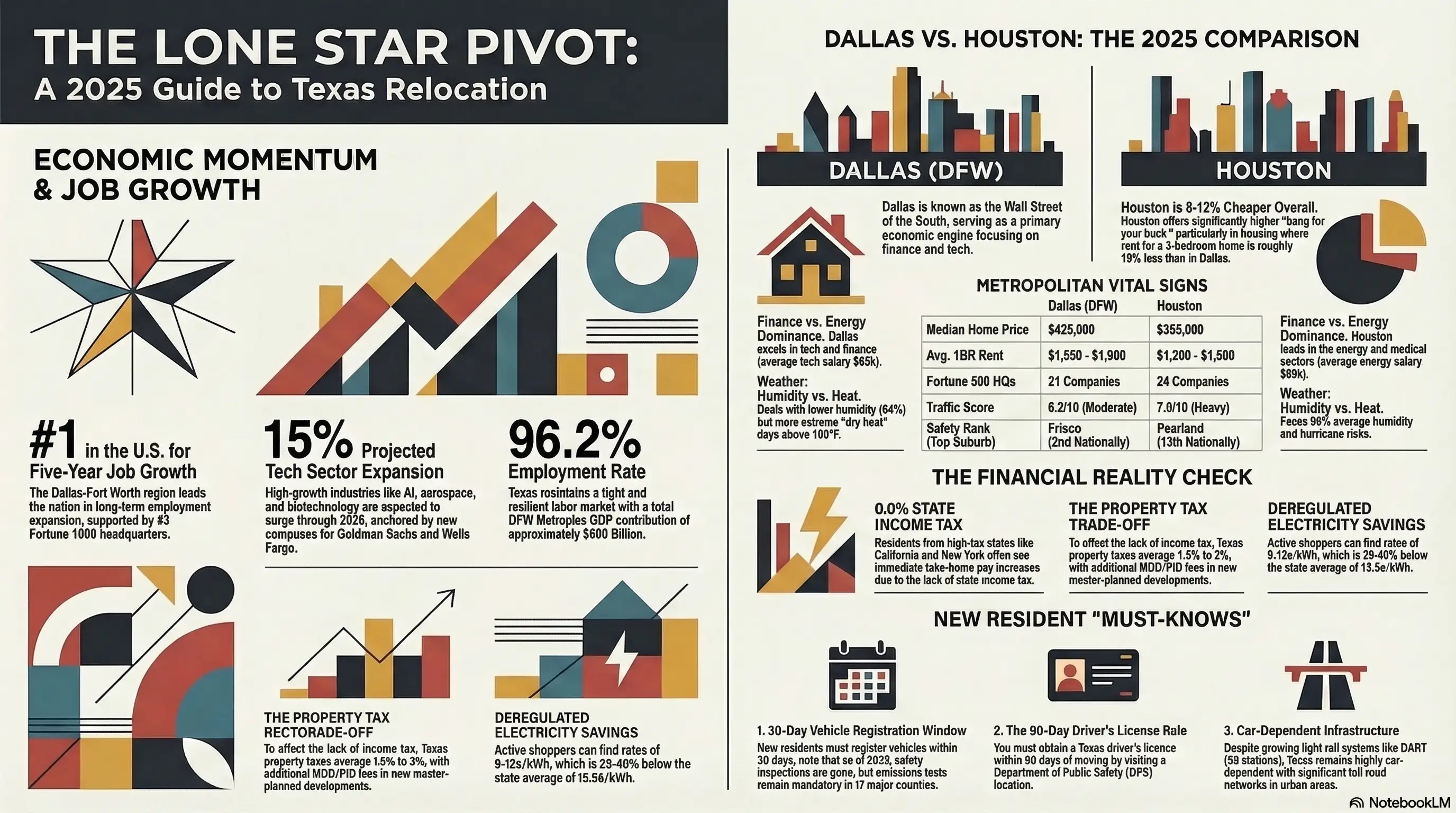
Texas Relocation At A Glance
Key stats on tax savings, cost of living, job growth, and top cities.
📥 Downloadable Resources
Test Your Texas Knowledge
Take our interactive quiz to see how much you know about relocating to Texas.
Also considering Dallas?
Compare neighborhoods, cost of living, and employers in our Dallas relocation guide.
Need a furnished place in Austin?
Our affiliate, Furnished Apartments Dallas, quotes furnished stays in Austin. It publishes no Austin terms or rates, so send your dates and ask about stay length and price.
RelocateMeTX is affiliated with Furnished Apartments Dallas.
More Austin Relocation Guides
Austin Moving Guide
Checklists, utilities setup & relocation tips
Austin Neighborhoods
Compare neighborhoods by cost, commute & vibe
Austin Cost of Living
2026 cost-of-living breakdown with sourced data
Cost of Living Calculator
Compare Austin costs vs. your current city
Austin Schools Guide
Top-rated districts and school rankings
Austin Employers
Tech hub: Tesla, Apple, Samsung & more
Moving from California
Guide for CA-to-Austin relocators
Austin vs Dallas
Side-by-side metro comparison
Best for Budget Seekers
Affordable Austin neighborhoods for new arrivals
Best for Outdoor Enthusiasts
Greenbelt, lake, and trail-adjacent neighborhoods
Best for Retirees
Quiet, walkable communities for Austin retirees
Best for Remote Workers
Austin areas ranked by fiber coverage, coworking and coffee
Best for Tech Workers
Neighborhoods close to the Silicon Hills employers
Best for Young Professionals
Walkable Austin neighborhoods with nightlife and dining
First 30 Days in Austin
New-resident checklist: license, registration, Austin Energy, Cedar Fever
Austin Moving Checklist
Step-by-step timeline from eight weeks out to move-in week
Austin Medical Lodging
Patient housing and medical lodging programs near Austin hospitals
Texas Income Tax Guide
No state income tax: see your savings
Sources & References (15)
The figures on this page come from the sources listed below. Check the dates before you rely on them.
- [1]U.S. Census Bureau — Population Estimates— Metro population and migration data
- [2]Bureau of Labor Statistics— Employment, wages, and CPI data
- [3]Fortune 500 (2026 List)— Corporate headquarters by metro
- [4]Unlock MLS (Austin Board of REALTORS®) August 2026 Central Texas Housing Report— Austin metro, City of Austin and Travis County median sale prices and leases, August 2026
- [5]Texas Education Agency — TXschools.gov— School district A–F accountability ratings (official search tool)
- [6]FEMA Flood Map Service Center— Flood zone designations
- [7]Texas Comptroller of Public Accounts — Property Tax Rates— Property tax rates by county
- [8]Walk Score— Walk, transit, and bike scores
- [9]Tax Foundation— County effective property tax rates, 2024 (Travis County, San Francisco County)
- [10]U.S. Census Bureau — American Community Survey 2020-2024— Median owner-occupied home value and median gross rent by city
- [11]Redfin— City median sale prices, three months to August 2026
- [12]NWS / NOAA NCEI 1991–2020 Climate Normals— Monthly normals and days at or above 100°F, Camp Mabry
- [13]CapMetro— Bus and rail fares and fare caps
- [14]TxDOT— I-35 Capital Express Central: $5.6 billion, completion expected 2033
- [15]Austin Water— Conservation Stage watering schedule
Get the Austin Insider Newsletter
Neighborhood insights and relocation updates for Austin. The newsletter is still in the works, so subscribe now and you'll be on the first send.
No spam. Unsubscribe anytime. We respect your privacy.
If you add us, Google is more likely to show RelocateMeTX in your Top Stories, and can mark our links as preferred in your AI Overviews and AI Mode. It only affects your own results.